
Journalist Ana Rosa Quintana, originally from the Madrid neighbourhood of Usera, reflects on her childhood in a fourth-floor flat without a lift in Almendrales and the transformation of the city. She received the honour medal from the City Council in 2023.
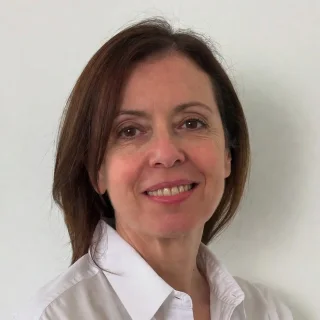
Ana Rosa Quintana, the most well-known presenter on Spanish television, still holds dear the neighbourhood that saw her born. Usera, in the south of Madrid, is not only her place of origin but also the backdrop of a humble childhood that shaped her character. In an interview given shortly before her move to the afternoon slot on Telecinco following the closure of 'Sálvame', the communicator revisited her memories and her connection to the capital.
A childhood in Almendrales, among exposed bricks
Quintana was born on Cadalso Street, in the Plaza de España, but when she was four, her family moved to the Almendrales settlement in Usera. There, on the fourth floor without a lift, she lived until she was 18. “They were flats with exposed brick on the outside and exposed brick on the inside,” she recalls. “You put your hand on the wall during siesta time and it burned in summer, and in winter it was the opposite.” The house, which was publicly subsidised, was built in the mid-50s.
The neighbourhood, then populated by immigrants from Extremadura and Andalucía, was a melting pot of working-class neighbours. “I remember Cándida, from the left ground floor, who was from Extremadura. They would bring out the chairs to the door as soon as the sun went down,” she reminisces. In her staircase lived a civil guard who was a cobbler in the afternoons, a bus driver, and a worker from Renfe. Her father was a travelling salesman and her mother, who initially was a housewife, ended up running the family warehouse office.
From Usera to Complutense and television
After her teenage years, the family moved to Antonio López Street, not straying too far from the neighbourhood. Quintana studied at the Complutense University and soon began her journalism career. Today, from the studios in Fuencarral, she dominates the television world, but she has not severed ties with her roots. “I have a group of journalist friends from different media outlets, and we are all from Usera and meet once a year to eat there,” she explains. Her go-to restaurant is El Ciri, on Amor de Dios Street.
In 2023, the City Council of Madrid awarded her the honour medal of San Isidro, a recognition that fills her with pride. “They also give it to Alaska and the Ángel Rojo. How can I not be thrilled if I am one of the few 'real' Madrileños,” she jokes. “My parents are from Madrid, three of my grandparents... I only have one who was born in Jaén.”
Usera today: transformation and data
The neighbourhood that saw her grow has changed a lot. Usera is organised into seven districts (Pradolongo, Orcasur, Orcasitas, San Fermín, Almendrales, Moscardó, and Zofio) and has just over 50,000 inhabitants with an average age of 42 years. The per capita income is 24,480 euros and the registered unemployment rate is 13.21%. In the last municipal elections, the neighbourhood predominantly voted for the left. Furthermore, it has become the main Chinatown of the capital, with a growing Asian community that has given a new character to its streets.
For the residents of the Community of Madrid, Ana Rosa Quintana's story reflects the evolution of the city: from the post-war flats without lifts to the modernity of a multicultural capital. The presenter, who will soon take over the afternoons on Telecinco, demonstrates that the roots of Usera remain very much alive.
You may also like


