
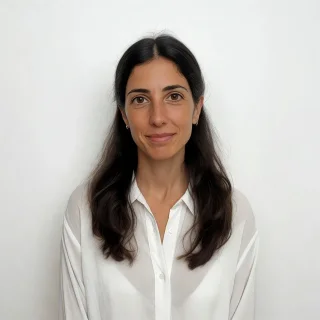
The director of La Juan Gallery, Rosa Ureta, claims that Madrid has overcome its complexes and stands on par with other major cultural capitals of the world. She advocates for a participatory culture that connects with citizens.
Rosa Ureta, director of La Juan Gallery, has dedicated over 20 years to cultural management. After working at La Fábrica and co-directing festivals in India, she is clear that the key to a cultural project is the people. “I believe that what has marked me the most is the importance of listening,” she states.
A Madrid without complexes
For Ureta, Madrid is experiencing one of its most interesting moments. “Madrid is a very generous and open city. You always find new audiences, new energies, and new ways of doing things,” she asserts. The director observes that the capital has left behind certain complexes. “Madrid is in vogue, but not just for image reasons; it has shed many complexes. We now look each other in the eye with other major cultural capitals of the world.”
This change has favoured the emergence of more projects that take culture out of conventional spaces to meet directly with the public. For the residents of Madrid, this means more cultural options outside traditional circuits, with proposals reaching neighbourhoods and public spaces.
Culture as a shared experience
Ureta advocates for formats where the spectator ceases to be a passive observer and becomes an active participant. “Culture doesn’t have to be a distant experience. It can be a shared, exciting, fun, sometimes uncomfortable experience, but always alive,” she explains.
An example of this philosophy is Cine Caliente, the proposal that returns this summer as part of Veranos de la Villa. The project breaks with the traditional solemnity of cinemas to turn each screening into a participatory spectacle where commenting, laughing, dancing, and even interrupting are part of the experience. The idea emerged almost as a game. “Juan, the co-director of the proposal, one day said to me: ‘Cine Caliente’. And from there we started to develop what that could be,” she recalls.
Behind this proposal lies a deep reflection on how we consume culture. Ureta advocates for recovering that social dimension that seemed to disappear for years. That’s why she insists that the audience should feel like protagonists and not just passive spectators.
The future of culture in Madrid
Looking to the future, Ureta has important projects pending. She dreams of promoting a National Centre for Live Arts and creating a large archive that collects the history of performance in Spain. But above all, she wishes for Madrid to continue evolving as an open, accessible, and less elitist cultural capital.
She calls for more institutional and private support, more venues, affordable tickets, and better conditions for those who make creation possible. “Madrid has enormous cultural energy, but for that energy to truly grow, it needs to be nurtured. Culture cannot sustain itself solely with passion; it needs structure, resources, and respect,” she concludes.
For those visiting Madrid for the first time, Ureta recommends going with the flow: “Madrid is also discovered through improvisation.” Stumbling upon a gallery, an alternative venue, or a small theatre is part of the true cultural identity of Madrid. Madrileños can take advantage of this energy to rediscover their city beyond the major museums.
You may also like


